
| Bacillus subtilis spores, Malachite green staining |
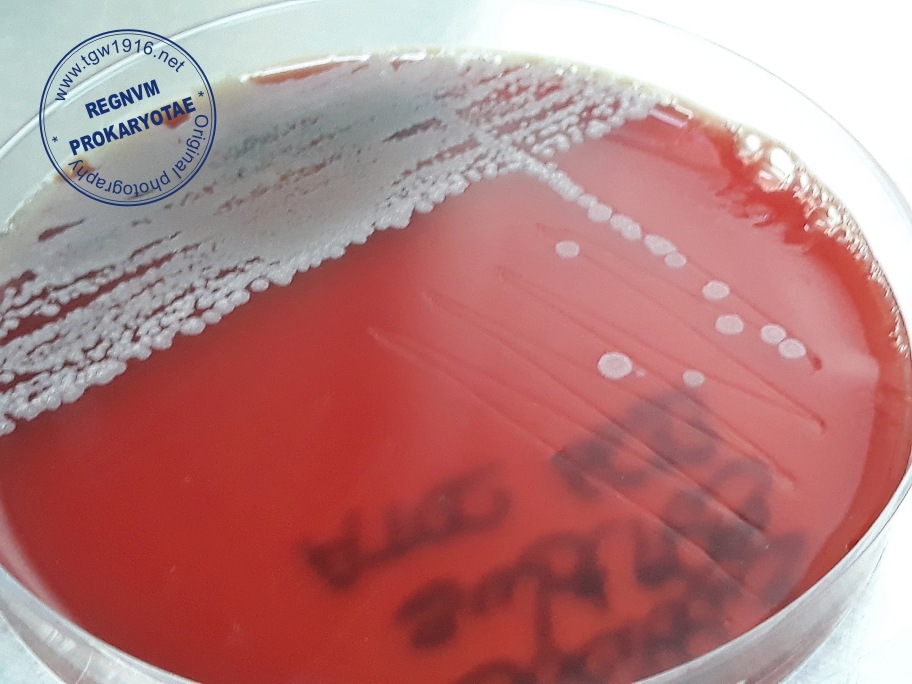
| Bacillus subtilis subsp. spizizenii ATCC 6633 R-type, opaque, gray-white colonies |
| Bacillus subtilis |
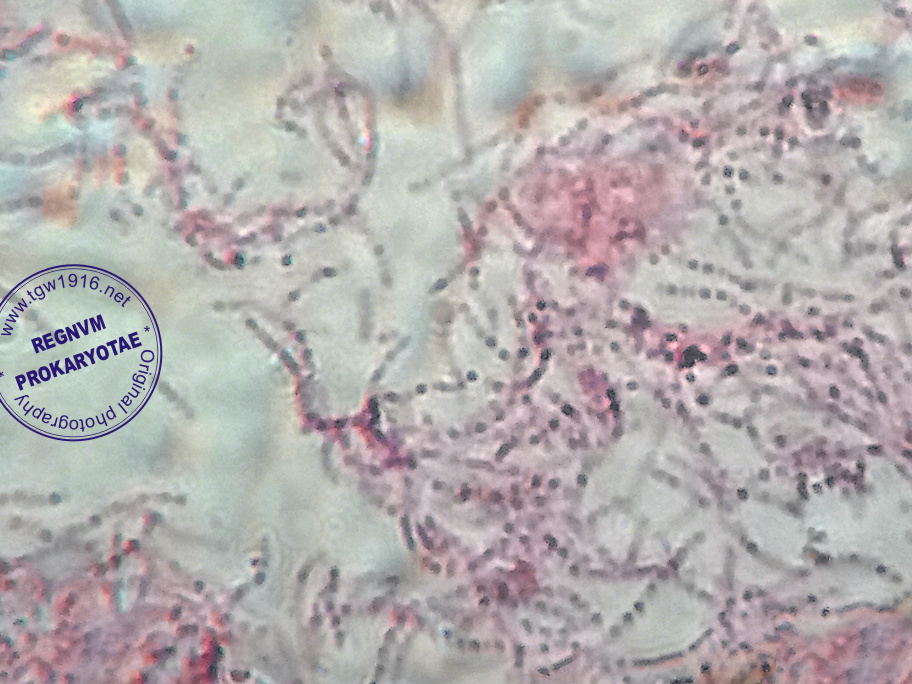
| Bacillus subtilis cells, Gram staining |
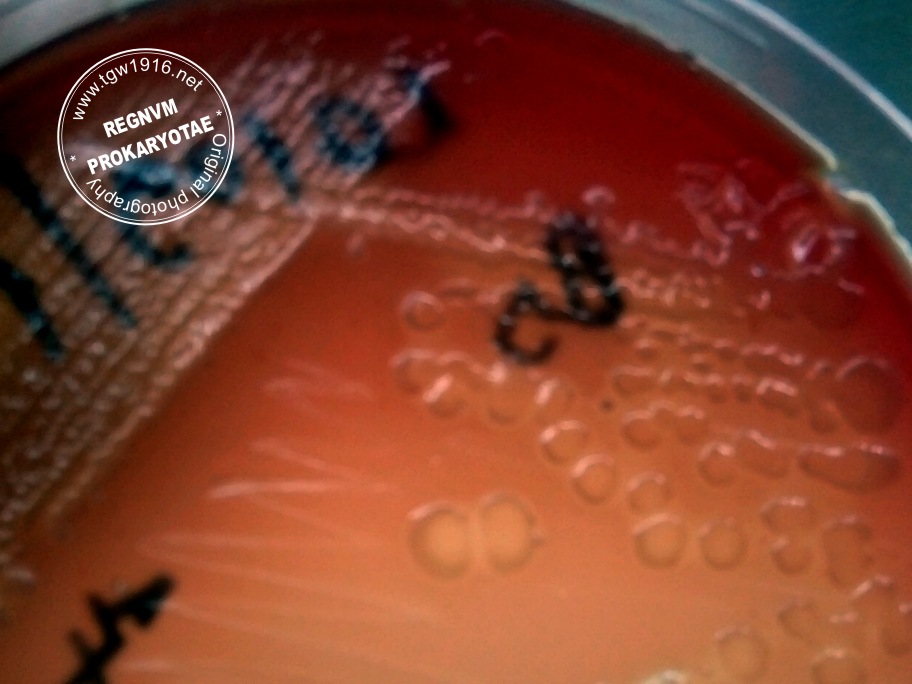
| Bacillus subtilis - sticky, translucent colonies on Sheep Blood Agar |
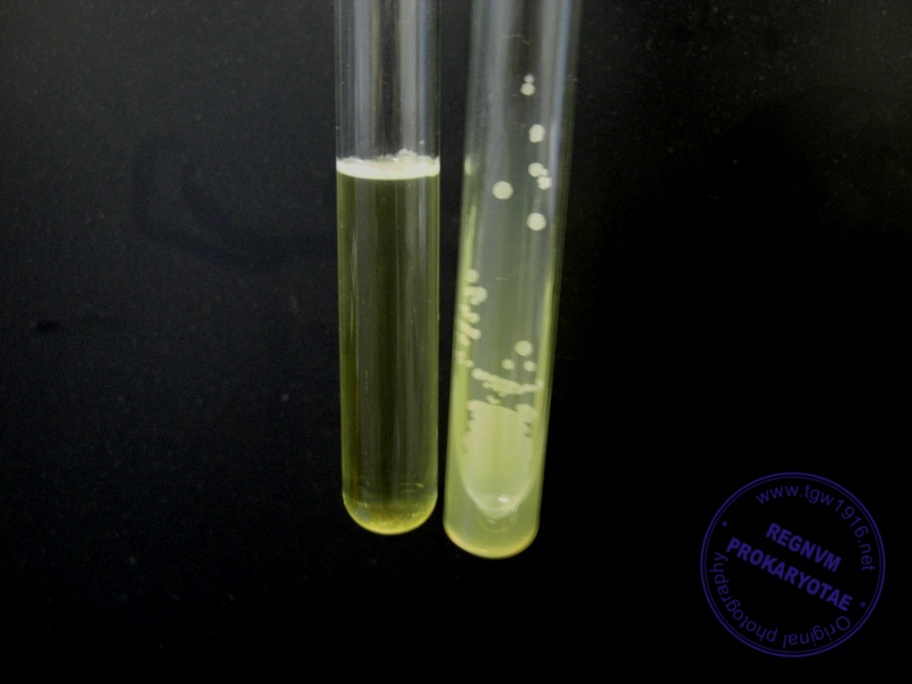
| Bacillus subtilis - pellicle in liquid medium and round, opaque colonies on solid medium |
Gram positive, 2.0-3.0 / 0.7-0.8 μm, motile, peritrichous flagella. Ellipsoidal or
cylindrical, central or paracentral spore (sometimes subterminal), not deforming the
vegetative cell. Most strains do not produce significant capsular material in the lab.
cylindrical, central or paracentral spore (sometimes subterminal), not deforming the
vegetative cell. Most strains do not produce significant capsular material in the lab.
Growth temperature from 5-15 ºC to 40-50 ºC. Optimum growth temperature 28-30 ºC.
Grows in 2%, 5% and 7% NaCl. NaCl is not required for growth. On agar media
colonies are round or irregular; surface dull; become thick and opaque; may be
wrinkled (rugose) and may become cream-colored or brown. Features of colonies
vary greatly with composition of the medium. Colonial morphology is variable, within
and between strains, and may give the appearance of a mixed culture.
Pigments, varying from cream through yellow, orange, pink and red, to brown or black,
may be formed on potato or agar media containing glucose; strains forming brown or
black pigment were often formerly called B. subtilis var. aterrimus. Strains forming
brownish-black pigment on tyrosine, and often formerly called B. subtilis var. niger,
have been split from B. subtilis as B. atrophaeus.
In broth produce dull, wrinkled pellicle; little or no turbidity. Growth is active at pH 5.5-
8.5 and in 7% NaCl.
Aerobic, does not grow anaerobically.
B. subtilis subsp. inaquosorum is facultatively anaerobic on TGY agar or broth. Growth
in 10% (w/v) NaCl occurs after 72 h. Growth in the presence of 0.001% (w/v) lysozyme
is variable.
B. subtilis subs. stercoris forms white irregular colonies 1–2 mm in diameter and is
facultative anaerobe.
Grows in 2%, 5% and 7% NaCl. NaCl is not required for growth. On agar media
colonies are round or irregular; surface dull; become thick and opaque; may be
wrinkled (rugose) and may become cream-colored or brown. Features of colonies
vary greatly with composition of the medium. Colonial morphology is variable, within
and between strains, and may give the appearance of a mixed culture.
Pigments, varying from cream through yellow, orange, pink and red, to brown or black,
may be formed on potato or agar media containing glucose; strains forming brown or
black pigment were often formerly called B. subtilis var. aterrimus. Strains forming
brownish-black pigment on tyrosine, and often formerly called B. subtilis var. niger,
have been split from B. subtilis as B. atrophaeus.
In broth produce dull, wrinkled pellicle; little or no turbidity. Growth is active at pH 5.5-
8.5 and in 7% NaCl.
Aerobic, does not grow anaerobically.
B. subtilis subsp. inaquosorum is facultatively anaerobic on TGY agar or broth. Growth
in 10% (w/v) NaCl occurs after 72 h. Growth in the presence of 0.001% (w/v) lysozyme
is variable.
B. subtilis subs. stercoris forms white irregular colonies 1–2 mm in diameter and is
facultative anaerobe.
Phylum Bacillota (Firmicutes), Class Bacilli, Order Caryophanales, Family Bacillaceae, Genus Bacillus, Bacillus subtilis (Ehrenberg
1835) Cohn 1872, type species of the genus. 3 subspecies:
- B. subtilis subsp. subtilis Nakamura, Roberts & Cohan 1999, phenotypically similar to Bacillus atrophaeus and distinguishable from
that species only by the pigmentation of the latter (brownish-black pigment production on tyrosine agar). Not distinguishable from B.
mojavensis, B. subtilis subsp. spizizenii and B. vallismortis by conventional phenotypic tests.
- B. subtilis subsp. spizizenii Nakamura, Roberts & Cohan 1999, phenotypically indistinguishable from B. subtilis subsp. subtilis, the
type strain was isolated from Tunisian soil.
- B. subtilis subsp. inaquosorum Rooney, Price, Ehrhardt, Swezey and Bannan 2009. Closely related to B. subtilis subsp. spizizenii,
differentiated by gene sequence analysis, m/z 1120.8 biomarker (MALDI-TOF MS analysis) and by FAME analysis (total cellular
content of the fatty acids C16 : 0 and iso-C17 : 1v10c).
- Bacillus subtilis subsp. stercoris Adelskov and Patel 2017.
According to Dunlap et al. 2020, B. subtilis subsp. inaquosorum, B. subtilis subsp.
spizizenii and B. subtilis subsp. stercoris are single species.
Probable species synonyms - Vibrio subtilis Ehrenberg 1835, Bacillus aterrimus
Lehmann and Neumann 1896, B. mesentericus Trevisan 1889, B. niger Migula 1900,
B. panis Migula 1900, B. vulgatus Trevisan 1889, Tyrothrix minimus Duclaux 1882,
B. nigrificans Fabian & Nienhuis 1934, B. mesentericus hydrolyticus Herman and
Neuschul 1935, B. natto Sawamura 1906.
Five serovars based on H-antigens and 29 phagovars using 10 phages are recognized.
1835) Cohn 1872, type species of the genus. 3 subspecies:
- B. subtilis subsp. subtilis Nakamura, Roberts & Cohan 1999, phenotypically similar to Bacillus atrophaeus and distinguishable from
that species only by the pigmentation of the latter (brownish-black pigment production on tyrosine agar). Not distinguishable from B.
mojavensis, B. subtilis subsp. spizizenii and B. vallismortis by conventional phenotypic tests.
- B. subtilis subsp. spizizenii Nakamura, Roberts & Cohan 1999, phenotypically indistinguishable from B. subtilis subsp. subtilis, the
type strain was isolated from Tunisian soil.
- B. subtilis subsp. inaquosorum Rooney, Price, Ehrhardt, Swezey and Bannan 2009. Closely related to B. subtilis subsp. spizizenii,
differentiated by gene sequence analysis, m/z 1120.8 biomarker (MALDI-TOF MS analysis) and by FAME analysis (total cellular
content of the fatty acids C16 : 0 and iso-C17 : 1v10c).
- Bacillus subtilis subsp. stercoris Adelskov and Patel 2017.
According to Dunlap et al. 2020, B. subtilis subsp. inaquosorum, B. subtilis subsp.
spizizenii and B. subtilis subsp. stercoris are single species.
Probable species synonyms - Vibrio subtilis Ehrenberg 1835, Bacillus aterrimus
Lehmann and Neumann 1896, B. mesentericus Trevisan 1889, B. niger Migula 1900,
B. panis Migula 1900, B. vulgatus Trevisan 1889, Tyrothrix minimus Duclaux 1882,
B. nigrificans Fabian & Nienhuis 1934, B. mesentericus hydrolyticus Herman and
Neuschul 1935, B. natto Sawamura 1906.
Five serovars based on H-antigens and 29 phagovars using 10 phages are recognized.
Taxonomy
Morphology
Cultural characteristics
Biochemical characters
Ecology
Pathogenicity
References
Spores are widely distributed in nature, especially in different heat-treated materials.
The vegetative growth may occur in numerous vegetal or animal materials, inclusive
in non-acid foods. The vegetative organisms participate in the early stages of the
breakdown of organic matter. Antibiotic producer („Subtiline”).
May accumulate metal ions (aluminium, cadmium, iron and zinc) non-enzymically by
adsorption to their cell surfaces and this can be of importance in waste treatment and
natural environments.
Subsp. inaquosorum was isolated from desert soil.
Subsp. stercoris was isolated from compost.
Subsp. spizizenii was isolated from a Tunisian desert.
The vegetative growth may occur in numerous vegetal or animal materials, inclusive
in non-acid foods. The vegetative organisms participate in the early stages of the
breakdown of organic matter. Antibiotic producer („Subtiline”).
May accumulate metal ions (aluminium, cadmium, iron and zinc) non-enzymically by
adsorption to their cell surfaces and this can be of importance in waste treatment and
natural environments.
Subsp. inaquosorum was isolated from desert soil.
Subsp. stercoris was isolated from compost.
Subsp. spizizenii was isolated from a Tunisian desert.
May produce bacteremia associated with immunosuppression, surgical intervention,
neoplastic disease and trauma. Other cases associated with neoplastic disease
include: fatal pneumonia and bacteremia, a septicemia and an infection of a necrotic
axillary tumour in breast cancer patients; breast prosthesis and ventriculo-atrial shunt
infections; endocarditis in a drug abuser; meningitis following a head injury;
cholangitis associated with kidney and liver disease; and isolations from
dermatolymphangioadenitis associated with filarial lymphedema, and from surgical
wound drainage sites.
Bacillus subtilis has been implicated in food-borne illness: vomiting with
accompanying diarrhea and the implicated foods were often prepared dishes in
which meat or fish were served with cereal-based components such as bread, pastry,
rice or stuffing.
B. subtilis has also been associated with bovine mastitis and of ovine abortion.
Subsp. inaquosorum is the causative agent of ropy (slimy) bread.
neoplastic disease and trauma. Other cases associated with neoplastic disease
include: fatal pneumonia and bacteremia, a septicemia and an infection of a necrotic
axillary tumour in breast cancer patients; breast prosthesis and ventriculo-atrial shunt
infections; endocarditis in a drug abuser; meningitis following a head injury;
cholangitis associated with kidney and liver disease; and isolations from
dermatolymphangioadenitis associated with filarial lymphedema, and from surgical
wound drainage sites.
Bacillus subtilis has been implicated in food-borne illness: vomiting with
accompanying diarrhea and the implicated foods were often prepared dishes in
which meat or fish were served with cereal-based components such as bread, pastry,
rice or stuffing.
B. subtilis has also been associated with bovine mastitis and of ovine abortion.
Subsp. inaquosorum is the causative agent of ropy (slimy) bread.
- Gordon R.E., Haynes W.C., Pang C.H. (1973) – The genus Bacillus. Agriculture Handbook No. 427, U.S.D.A., Washington D.C.
- Buchanan R.E., Gibbons N.E., Cowan S.T., Holt J.G., Liston J., Murray R.G.E., Niven C.F., Ravin A.W., Stanier R.W. ( 1974) –
Bergey’s Manual of Determinative Bacteriology, Eight Edition, The Williams & Wilkins Company, Baltimore. - Bîlbîie V., Pozsgi N., 1985, Bacteriologie Medicala, vol.ll, Ed. Medicala, Bucuresti.
- Buiuc D., Negut M. , 2009. Tratat de Microbiologie Clinica, editia a III-a, Editura Medicala, Bucuresti.
- N.A. Logan and P. De Vos, 2009. Genus I. Bacillus Cohn 1872. In: (Eds.) P.D. Vos, G. Garrity, D. Jones, N.R. Krieg, W. Ludwig, F.A.
Rainey, K.-H. Schleifer, W.B. Whitman. Bergey’s Manual of Systematic Bacteriology, Volume 3: The Firmicutes, Springer, 21-127. - Rooney A.P., Price N.P.J., Ehrhardt C., Swezey J.L. and Bannan J.D., 2009. Phylogeny and molecular taxonomy of the Bacillus
subtilis species complex and description of Bacillus subtilis subsp. inaquosorum subsp. nov. IJSEM 59, 2429-2436. - Van Pham HT, Kim J. Bacillus thaonhiensis sp. nov., a new species, was isolated from the forest soil of Kyonggi University by
using a modified culture method. Curr Microbiol 2014; 68:88-95. - Dunlap CA, Bowman MJ, Zeigler DR. Promotion of Bacillus subtilis subsp. inaquosorum, Bacillus subtilis subsp. spizizenii and
Bacillus subtilis subsp. stercoris to species status. Antonie Van Leeuwenhoek 2020; 113:1-12. - Adelskov J, Patel BKC. Erratum to: A molecular phylogenetic framework for Bacillus subtilis using genome sequences and its
application to Bacillus subtilis subspecies stecoris strain D7XPN1, an isolate from a commercial food-waste degrading bioreactor.
3 Biotech 2017; 7:142.
Positive results for acid and alkaline phosphatase, catalase, caseinase, esculin
hydrolysis, esterase, esterase lipase, beta-galactosidase, alpha-glucosidase, nitrate
reduction, naphthol-AS-BI-phosphohydrolase, starch hydrolysis, Voges-Proskauer
reaction, acid production from: arbutin, cellobiose, esculin ferric citrate, fructose,
glucose, glycerol, glycogen, beta-gentibiose, meso-inositol, mannitol, mannose,
maltose, raffinose, ribose, salicin, sorbitol, sucrose, tagatose (weak), trehalose,
turanose (weak) and D-xylose.
Negative results for hydrolysis of hippurate, arginine dihydrolase, alpha-chymotrypsin,
degradation of tyrosine, deamination of phenylalanine, lysine decarboxylase, ornithine
decarboxylase, acid production from: adonitol, D- and L-arabinose, D- and L-arabitol,
dulcitol, erythritol, D- and L-fucose, gluconate, 2- and 5-ketogluconate, lyxose,
melezitose, rhamnose, sorbose, xylitol and L-xylose.
Variable results for utilization of citrate as a source of carbon (depending on used
method - admin note), oxidase, acid production from N-acetylglucosamine, lactose,
inulin and galactose.
Subsp. stercoris degrades potato starch by amylase activity and expresses partial
beta-xylanase activity.
hydrolysis, esterase, esterase lipase, beta-galactosidase, alpha-glucosidase, nitrate
reduction, naphthol-AS-BI-phosphohydrolase, starch hydrolysis, Voges-Proskauer
reaction, acid production from: arbutin, cellobiose, esculin ferric citrate, fructose,
glucose, glycerol, glycogen, beta-gentibiose, meso-inositol, mannitol, mannose,
maltose, raffinose, ribose, salicin, sorbitol, sucrose, tagatose (weak), trehalose,
turanose (weak) and D-xylose.
Negative results for hydrolysis of hippurate, arginine dihydrolase, alpha-chymotrypsin,
degradation of tyrosine, deamination of phenylalanine, lysine decarboxylase, ornithine
decarboxylase, acid production from: adonitol, D- and L-arabinose, D- and L-arabitol,
dulcitol, erythritol, D- and L-fucose, gluconate, 2- and 5-ketogluconate, lyxose,
melezitose, rhamnose, sorbose, xylitol and L-xylose.
Variable results for utilization of citrate as a source of carbon (depending on used
method - admin note), oxidase, acid production from N-acetylglucosamine, lactose,
inulin and galactose.
Subsp. stercoris degrades potato starch by amylase activity and expresses partial
beta-xylanase activity.

(c) Costin Stoica



| Back |